
The Quiet Ledger · Independent analysis
The Quiet Ledger: Issue #3 | 28 August 2026
Bitcoin ETF inflows slow while Ether funds accelerate, inflation stays above target, and The Sandbox bridge exploit exposes the accounting behind cross-chain claims.
From: Ledgers Academy (newsletter@ledgersacadamy.com)
Subject: ETF demand splits as bridge risk moves back into focus
Preview: Bitcoin fund flows cool, Ether funds accelerate, and The Sandbox bridge shows why reserves and verification must match.
THE QUIET LEDGER
Issue #3 | Week of 22 to 28 August 2026
ETF divergence, stubborn inflation, and the accounting problem inside cross-chain bridges
Crypto finished the week close to where it began, but the path was anything but quiet. A sharp liquidation wave cleared leverage, US inflation stayed above the Federal Reserve's target, and institutional flows split between Bitcoin and Ether. The most useful signal was not direction. It was the widening gap between assets, products, and systems that looked similar until pressure arrived.
1. The Macro Pulse
Bitcoin: $77,839, down 0.6 percent over seven days
Ethereum: $2,443, down 2.9 percent over seven days
Fear and Greed Index: 73, Greed, up from 72 one week earlier
Spot ETF Flows
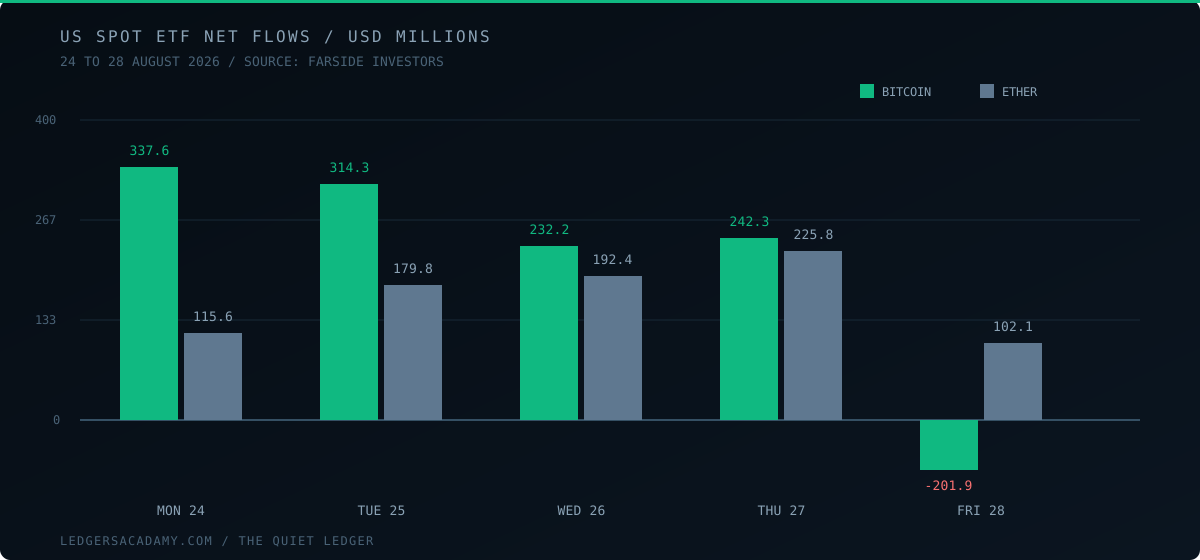
- US spot Bitcoin ETFs took in $924.5 million over the final trading week. That was still substantial, but it was 51.8 percent below the prior week's $1.92 billion.
- US spot Ether ETFs gathered $815.7 million, 17.8 percent more than the prior week. Ether fund demand strengthened even while ETH itself underperformed Bitcoin.
- Friday broke the pattern. Bitcoin funds lost $201.9 million after nine consecutive inflow sessions, while Ether funds added another $102.1 million. One session does not define a trend, but the divergence deserves attention.
Liquidation Dynamics
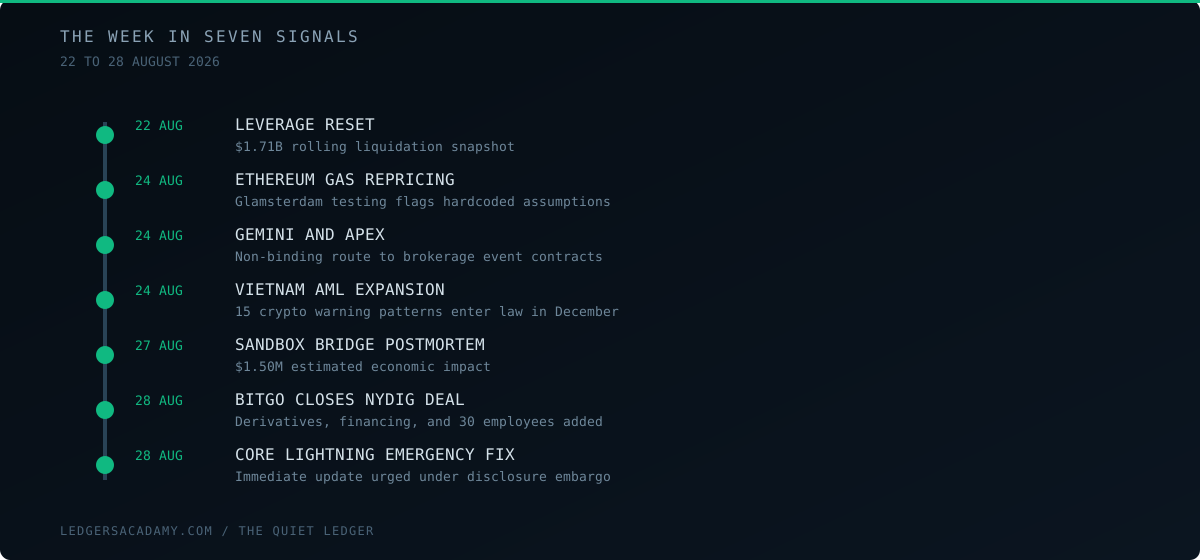
- A rolling 24 hour snapshot on 22 August showed about $1.71 billion of positions liquidated across more than 281,000 traders. It was the week's clearest leverage reset.
- The rebound on 24 August then removed more than $220 million of short positions, showing how quickly crowded positioning changed sides.
- A separate 28 August snapshot recorded $485.9 million of liquidations, including roughly $368 million of longs. These windows overlap, so they cannot honestly be added into a weekly total.
Macro and Central Bank Trends
- US headline PCE inflation rose 0.2 percent in July and 3.7 percent from a year earlier. Core PCE was 3.3 percent. Inflation cooled at the margin but remained well above target.
- Federal Reserve Chair Kevin Warsh called the 2 percent PCE objective a firm target and said the summer data had not shown meaningful improvement in underlying inflation.
- Personal income grew 0.4 percent, while real consumption was effectively flat. Households earned more in nominal terms, but inflation absorbed much of the gain.
Takeaway: Fund demand remained positive, but it became more selective. At the same time, repeated liquidation bursts showed that leverage was still capable of turning ordinary price moves into violent intraday swings. The data describes a market with durable access to capital and fragile short term positioning.
Sources: Farside Bitcoin ETF flows, Farside Ether ETF flows, US Bureau of Economic Analysis, and Federal Reserve.
2. This Week in Headlines
Security and Protocols
- The Sandbox retired its Base and BNB Chain bridge contracts. Its postmortem estimated $1.50 million of economic impact after an attacker changed the verification path and created unbacked SAND. Ethereum and Polygon balances were not affected.
- Core Lightning issued an emergency security release. Maintainers urged node operators to update immediately while technical details remained under a 14 day disclosure embargo.
- Ethereum tested gas repricing for Glamsterdam. The proposed changes better align state access with its processing cost and support higher throughput, but contracts with hardcoded gas assumptions may need adjustment.
Institutions and Markets
- Gemini and Apex signed a non-binding letter of intent. The contemplated service would distribute regulated crypto event contracts through brokerage accounts, subject to final terms.
- BitGo completed its acquisition of NYDIG's institutional trading business. The deal adds derivatives, structured products, financing capabilities, client relationships, and about 30 employees.
Policy and the World
- Vietnam expanded anti-money-laundering duties for crypto services. Providers will have to report suspicious activity across 15 warning patterns when the law takes effect on 1 December 2026.
- The US inflation debate hardened after Jackson Hole. Warsh's remarks reduced the comfort that one softer data point would automatically bring easier policy. Crypto traded the uncertainty rather than a settled rate path.
3. The Weekly Deep Dive: When a Bridge Mints Claims Without Reserves
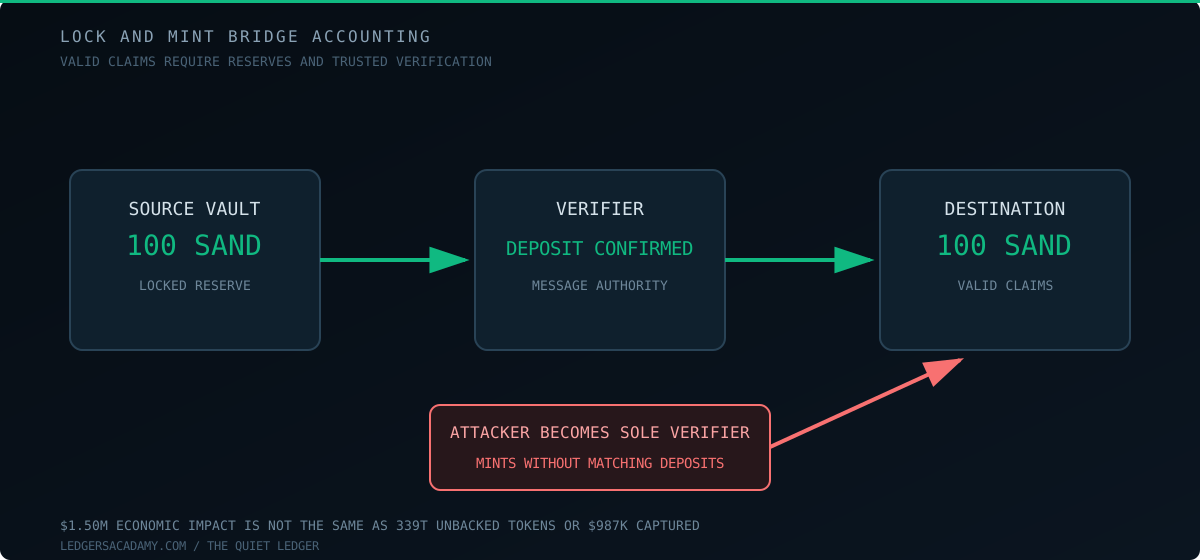
A lock-and-mint bridge creates a simple promise. Tokens are locked on one chain, then an equal number of representations are minted on another. If 100 tokens are locked, no more than 100 valid claims should circulate elsewhere. The bridge is solvent only while that equality holds.
How the mechanism works
- The source vault holds the reserve. A user deposits the original token into a contract that should not release it without a valid return message.
- A verifier confirms the deposit. Validators, relayers, or a messaging protocol attest that the source event really happened.
- The destination contract mints the claim. The user receives a wrapped or bridged token that represents a right to the reserve.
- The reverse path burns before release. Returning home should destroy the representation before unlocking the original asset.
The Sandbox incident broke the third step. A general-purpose call allowed the verification configuration to be reassigned so that an attacker-controlled address became the sole verifier. That address could then approve mints without matching deposits. More than 339 trillion unbacked SAND were created on Base and BNB Chain, but that number was not the financial loss. Most of those tokens had no credible market. The official estimate separated economic impact, about $1.50 million, from the amount captured by the attacker, about $987,000.
This distinction matters. Token supply, reserve shortfall, market value, and attacker proceeds answer different questions. Treating them as one number creates sensational headlines and poor risk analysis.
What a user can check
- Ask who can change the verifier set and whether that power has a delay or independent approval.
- Compare destination supply with source-chain reserves when dashboards make both available.
- Pause new bridge deposits during an incident, even if your own wallet and keys remain secure.
- Prefer bridges with public postmortems, narrow administrative permissions, and a clear process for retiring compromised contracts.
4. Security and Onchain Radar
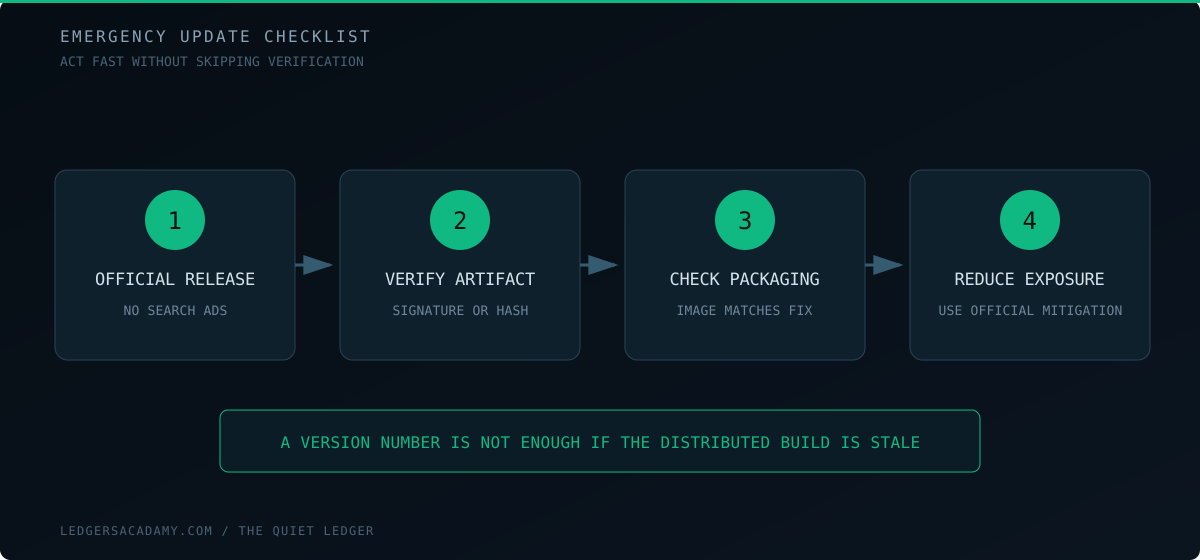
Core Lightning's emergency release is a useful operational reminder. When maintainers publish a security update before disclosing the bug, users have to act with incomplete information. The right response is not panic. It is disciplined verification.
- Use the project's official release page, not a search advertisement or a link copied from a chat.
- Verify signatures or checksums when the project supplies them.
- Read packaging notes. A valid version number is not enough if a container image or mirror still serves an older build.
- If immediate updating is impossible, follow the maintainer's published mitigation and reduce exposure until the patch is confirmed.
The same rule applies to bridges. A wallet can be uncompromised while the shared infrastructure beneath it fails. Self-custody removes one counterparty. It does not remove software, governance, oracle, or messaging risk.
5. From the Academy Library
- Master Guide: Blockchain Architecture: Layer 1, Layer 2, and Modular Chains, for the trust boundaries between execution, settlement, data availability, and messaging.
- Lexicon: Cross-Chain Bridges, for a concise explanation of lock-and-mint systems and their main failure modes.
Recommended Tools
- DefiLlama Bridges for comparing bridge volume and locked value.
- Etherscan for checking contracts, transactions, and token supply on Ethereum.
- Revoke.cash for reviewing and removing stale token approvals.
The week did not deliver a clean market verdict. It delivered a better checklist. Follow the flows, separate overlapping data, and inspect the systems that turn one token into a claim on another.
The Ledgers Academy Team
Website: ledgersacadamy.com
Research and notes: @TheQuietLedge on X
Disclaimer: Published strictly for educational purposes. Not financial or legal advice.
You are receiving this email because you subscribed at ledgersacadamy.com. Unsubscribe