
Ledgers Academy Letter
The Daily Ledger: 30 September 2026
August core PCE rose 0.2 percent on the month and 3.0 percent on the year, below expectations, trimming the case for an October rate rise. Bitcoin spiked to about $85,600 and gave the whole move back, closing its best quarter since early 2024 at roughly 42.7 percent.
Subject: Core inflation came in at 3.0 percent and bitcoin gave back a $2,000 rally the same day
Preview: The August PCE print landed softer than expected, which trims the case for an October rate rise. Bitcoin closed its best quarter since early 2024 anyway, up about 42.7 percent.
THE DAILY LEDGER
30 September 2026
August core PCE slows to 3.0 percent a year, bitcoin spikes and fades on the number, and the third quarter closes with bitcoin up roughly 42.7 percent and ether up 71.0 percent
Editor's note: prices are CoinGecko 00:00 UTC snapshots unless stated. The Bureau of Economic Analysis released August personal income and outlays at 12:30 UTC on 30 September 2026. Quarterly returns below are computed from CoinGecko daily snapshots and the base used is stated.
The Bureau of Economic Analysis reported this morning that the core personal consumption expenditures price index rose 0.2 percent in August and 3.0 percent over the year, below expectations. Core PCE is the inflation measure the Federal Reserve actually targets, and a softer reading reduces the case for another rate increase in October. Bitcoin rose to roughly $85,600 on the news and gave the entire move back within the session.
1. The Day in Numbers
- Bitcoin: $83,640 at 00:00 UTC, up about 0.2 percent from Tuesday's open, after an intraday spike to roughly $85,600 that did not hold.
- Ether: $2,677 at 00:00 UTC, down about 0.4 percent on the day.
- Fear and Greed Index: 71, Greed, down two points from Tuesday.
- August core PCE: +0.2 percent on the month, +3.0 percent on the year. Headline PCE rose 0.3 percent and 3.4 percent. The personal saving rate was 4.1 percent.
- Bitcoin market value: $1.680 trillion at 00:00 UTC, with ether at $327 billion.
2. What core PCE is and why it moves bitcoin
The personal consumption expenditures price index measures what American households actually paid, adjusted for the fact that people substitute when prices change. The core version strips out food and energy. That sounds like hiding the parts that matter, and it is the opposite: food and energy swing on weather, harvests and supply shocks that interest rates cannot influence, so leaving them in tells you about events while taking them out tells you about pressure.
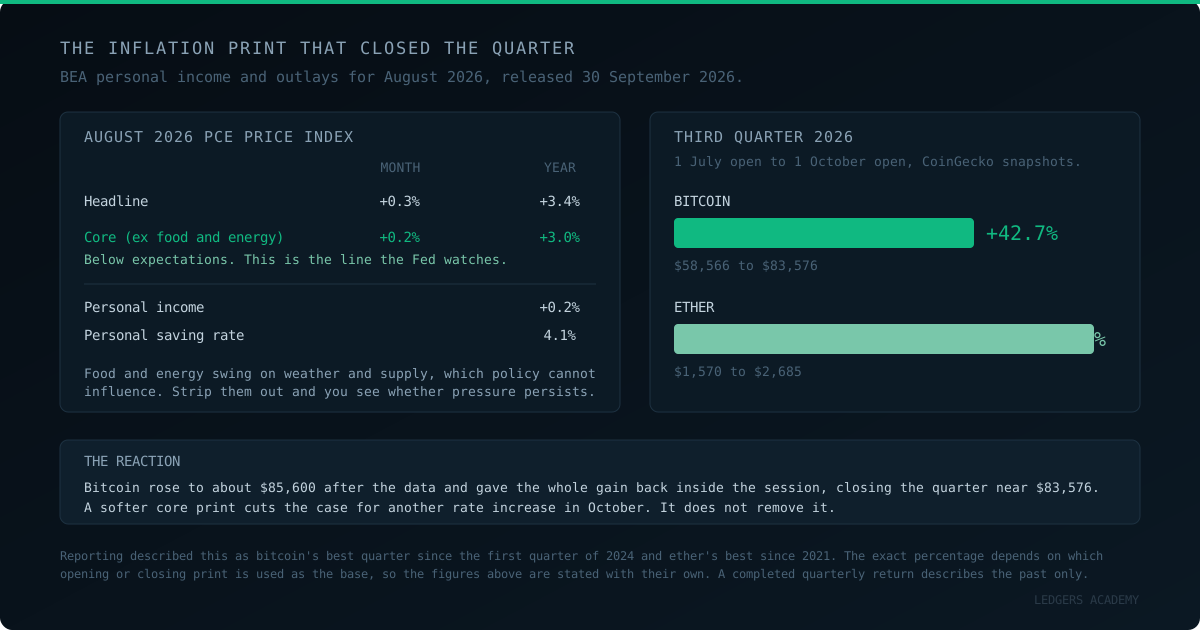
The link to bitcoin runs through the rate path, not through inflation itself. Higher policy rates raise the return on cash and government paper, which makes an asset that produces no income less attractive at the margin and tightens the credit funding leveraged positions. A softer core print lowers the probability the market assigns to an October increase. It says nothing about whether that increase happens.
Today's reversal is the honest version of that. Bitcoin rallied about $2,000 in minutes, then sold back to where it started, which is what a market does when it revises a probability rather than learning a fact. Our note on the dollar index and bitcoin covers the channel the move travels through.
The quarter closed regardless. From the opening of 1 July to the opening of 1 October, bitcoin rose from $58,566 to $83,576, about 42.7 percent, and ether from $1,570 to $2,685, about 71.0 percent. Reporting called those bitcoin's strongest quarter since the first quarter of 2024 and ether's best since 2021. The exact figure depends which print you use as the base, which is why ours is stated with it.
3. Today's Headlines
The October decision is now genuinely open
A softer core reading cuts the case for a further increase without closing it. The Fed raised its target range by 25 basis points to 3.75 to 4.00 percent in September, so the question on the table is whether a second move follows, not whether policy is tightening.
Bitget's third withdrawal window
USDT withdrawals were scheduled to reopen on Wednesday, after bitcoin on Monday and ether on Tuesday, with remaining tokens and fiat due on 2 October. Tuesday's net outflow of roughly $463 million was the largest single day the exchange has recorded.
4. Security Note
This is an evergreen note, labelled as such, because no new major incident was documented in the last 24 hours. Quarter end and tax year end bring a specific scam: messages claiming a tax authority, exchange or accounting service needs your transaction history, usually with a file to open or a portal to log into.
The rule: export your own records from the exchange yourself, from the account you logged into by typing the address, and never from a link in a message. No tax authority asks for a seed phrase, and no legitimate accounting tool needs withdrawal permission on an API key. If you connect a tool for reporting, issue a key with read-only access and no withdrawal rights, and delete it when the job is done. The crypto tax and regulatory guide covers what records you actually need.
5. From the Academy Library
How macro data reaches crypto prices is covered in the bitcoin market cycles and macro guide, inflation measures and the dollar in the dollar index and bitcoin correlation, and new readers can start at Academy School.
A 0.2 percent monthly number moved a trillion dollar asset by $2,000 and then unmoved it. That is a market trading the odds of a decision, not the decision.
Disclaimer: This publication is for education and information only. It is not financial, investment, legal, tax, or security advice.
Sources and further reading
- Bureau of Economic Analysis: personal income and outlays, August 2026
- The Block: bitcoin steadies as soft PCE cools October rate hike bets
- CoinDesk: bitcoin closes out its best quarter since 2024, ether its best since 2021
- The Crypto Times: Bitget USDT withdrawals due after the record outflow
- CoinGecko: bitcoin price on 1 July 2026, the quarterly base used above
- Alternative.me: Fear and Greed Index