
Ledgers Academy Letter
The Daily Ledger: 29 September 2026
Bitget covered the loss, reopened bitcoin withdrawals, and about $463 million of net outflow followed in 24 hours, its largest single day on record. Nobody was left out of pocket, and customers left anyway, because a covered loss still proves the loss was possible.
Subject: Bitget covered the loss, reopened the doors, and $463 million walked out
Preview: Nobody was left out of pocket and customers left anyway. That is the largest single-day outflow the exchange has recorded, and it is a rational response to a covered hack.
THE DAILY LEDGER
29 September 2026
Bitget records its largest one-day net outflow after withdrawals reopen, publishes a 131 percent reserve snapshot, and bitcoin slips a little further below $83,500
Editor's note: prices are CoinGecko 00:00 UTC snapshots for 29 September 2026. Outflow figures cover the 24 hours into Tuesday and are reported readings, not audited ones. The reserve snapshot was published at 09:00 UTC on 29 September.
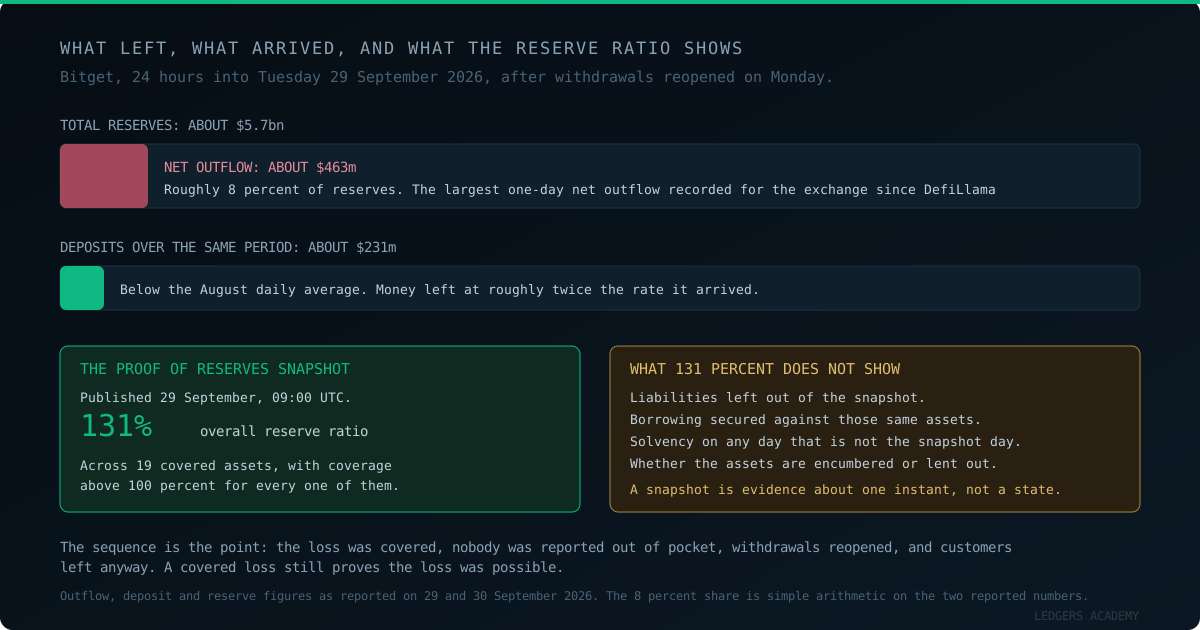
Bitget reopened bitcoin withdrawals on Monday morning, and roughly $463 million of net outflow followed in the 24 hours into Tuesday, the largest single-day figure recorded for the exchange since DefiLlama began tracking proof of reserves four years ago. No customer has been reported out of pocket. Customers withdraw after an exchange covers a hack because the cover answers a question about this loss, and leaves the more important one untouched: a breach that happened once can happen again, and the next one is not guaranteed to be inside the fund.
1. The Day in Numbers
- Bitcoin: $83,479 at 00:00 UTC, down about 1.1 percent from Monday's open and roughly 3.6 percent below last Tuesday's high.
- Ether: $2,688 at 00:00 UTC, flat on the day for a fifth session.
- Fear and Greed Index: 73, Greed, down one point from Monday.
- Bitcoin market value: $1.677 trillion at 00:00 UTC, with ether at $328 billion.
- Bitget: about $463 million out, about $231 million in over the 24 hours into Tuesday, against reserves of roughly $5.7 billion. Money left at about twice the rate it arrived.
2. Why customers withdraw after an exchange covers a hack
The reasoning is not panic, and it is not ingratitude. A protection fund pays out in the currency of the loss that already happened. What a depositor is actually exposed to is every loss that has not happened yet, and the only evidence they have just received is that this venue's wallets could be reached.
There is a second reason, and it is about correlation rather than trust. The fund that covered this loss is reported to be held mostly in bitcoin, so its ability to cover the next one depends on the bitcoin price at the time. A depositor who understands that is not moving funds because they expect a failure. They are removing themselves from a conditional guarantee.
Bitget published a reserve snapshot at 09:00 UTC showing an overall ratio of 131 percent across 19 assets, with coverage above 100 percent for each. That is a real and useful disclosure, and it is also narrower than it looks. A proof of reserves snapshot shows that the assets counted exceeded the liabilities counted at one instant. It cannot show liabilities left out, borrowing secured against the same coins, or the position on any other day.
What we do not know yet is whether the outflow continues once the remaining assets reopen, or whether this was a single wave of people who had already decided and were waiting for the gate.
3. Today's Headlines
Deposits tell the quieter half of the story
About $231 million arrived over the same period, below the exchange's August daily average. Outflows after an incident are expected, and a slowdown in new deposits is the number that decides whether a venue recovers its share.
The phased reopening continues
Ether and other tokens were scheduled to follow bitcoin on Tuesday, with USDT on Wednesday and the remaining assets on 2 October. Each window is its own test of reserve depth.
A fifth flat session for ether
Ether has sat within about $10 of $2,690 since 25 September while bitcoin has drifted down roughly 1 percent. A spread that narrow usually means neither asset is being driven by anything specific to it.
4. Security Note
With withdrawals reopening in phases, this week's live risk is the recovery scam rather than the original breach. Accounts posing as the exchange, as recovery firms, or as blockchain analytics outfits are offering to retrieve funds or expedite withdrawals for an upfront fee or a signature.
The rule: nobody can recover stolen crypto for you in exchange for a fee, and nobody legitimate asks for a signature to process a withdrawal. If a service claims it can reverse or expedite anything, the request itself is the attack. Our note on whether stolen crypto can be traced and recovered explains what is genuinely possible, which is tracing and occasional freezing by issuers, not reversal.
5. From the Academy Library
Exchange failure and the creditor queue are in what happens when a crypto exchange goes bankrupt, stablecoin freezes in what is a stablecoin address freeze, and the running incident list on the crypto exploit tracker. New readers can start at Academy School.
An exchange can do everything right after a breach and still see roughly 8 percent of its reserves leave in a day. That is not unfairness. It is the market pricing the information the breach supplied.
Disclaimer: This publication is for education and information only. It is not financial, investment, legal, tax, or security advice.
Sources and further reading
- The Cryptonomist: the hack triggers Bitget's largest one-day outflows
- Crypto Briefing: Bitget records $231 million in deposits, below the August average
- The Crypto Times: USDT withdrawals due after the record outflow, reserves at 131 percent
- Bitget: withdrawals to resume in phases
- CoinGecko: daily price and market value snapshots used above
- Alternative.me: Fear and Greed Index