
Ledgers Academy Letter
The Daily Ledger: 28 September 2026
The CFTC registered Coinbase Clearing, giving one company the broker, the exchange and the clearing house in American derivatives. A clearing house becomes the counterparty to both sides of every trade, and this registration covers fully collateralised products, which is narrower than the headline.
Subject: Coinbase now owns all three licences a regulated futures market needs
Preview: The CFTC registered Coinbase Clearing, so one company runs the broker, the exchange and the clearing house. The scope is narrower than the headline, and the concentration is the point.
THE DAILY LEDGER
28 September 2026
Coinbase completes its US derivatives stack with a clearing house registration, Bitget reopens bitcoin withdrawals at 08:00 UTC, and a stronger dollar pulls bitcoin back under $83,000
Editor's note: prices are CoinGecko 00:00 UTC snapshots for 28 September 2026 unless stated, with the intraday level noted from reporting at 11:20 UTC (13:20 Europe/Stockholm). Monday fund flow data is not complete at the time of writing.
Coinbase said on Monday that the Commodity Futures Trading Commission has registered Coinbase Clearing, which gives one company the broker, the exchange and the clearing house in American derivatives. A derivatives clearing organisation steps between the buyer and the seller of every trade and becomes the counterparty to both, so that neither has to trust the other. Owning all three pieces is efficient, and it also means the thing designed to remove counterparty risk now sits inside the same group as the venue and the broker.
1. The Day in Numbers
- Bitcoin: $84,449 at 00:00 UTC, falling to roughly $82,958 by 11:20 UTC on a firmer dollar and higher bond yields.
- Ether: $2,688 at 00:00 UTC, down about 0.3 percent on the day.
- Fear and Greed Index: 74, Greed, up four points from Sunday even as prices fell.
- Bitcoin market value: $1.697 trillion at 00:00 UTC, with ether at $328 billion.
- Bitget: bitcoin withdrawals reopened at 08:00 UTC, the first of four scheduled phases. Net flow for the day is not yet measurable.
2. What a derivatives clearing organisation does
Three separate registrations stand behind one regulated futures trade in the United States. A futures commission merchant holds customer money and faces the customer. A designated contract market matches the orders. A derivatives clearing organisation takes the matched trade and replaces it with two trades against itself, collecting margin from each side.
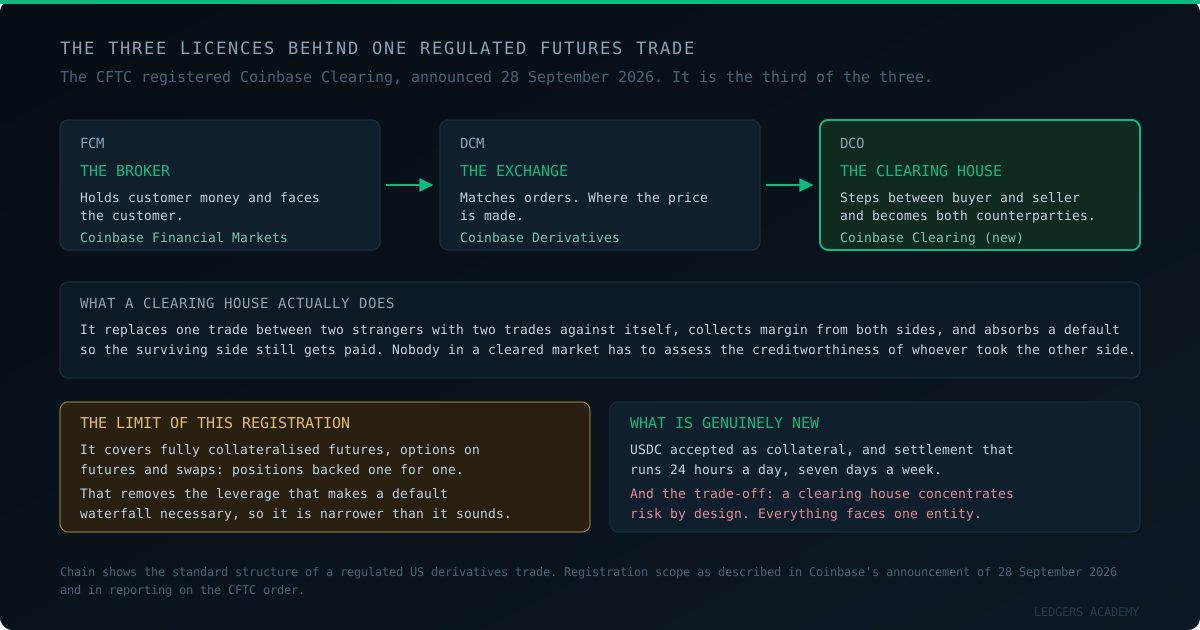
That substitution is the whole product. Because the clearing house is the counterparty to everyone, nobody needs to judge whether the person on the other side can pay, and if a member defaults the clearing house absorbs it through margin, its own capital and a default fund before anyone else loses money. Our note on auto-deleveraging describes what offshore crypto venues do instead, which is to push losses on to profitable traders.
The scope here is narrower than the headline suggests. Coinbase's announcement and reporting on the order describe clearing for fully collateralised futures, options on futures and swaps, meaning positions backed one for one. Fully collateralised products carry almost none of the default risk that makes clearing houses load-bearing in the first place, so this is a licence to run the plumbing, not yet to intermediate leverage. What is new is the collateral and the clock: USDC is accepted as margin and settlement runs continuously, which no established clearing house does.
The open question is concentration. A clearing house is a deliberate single point of failure, and regulators normally like it owned separately from the venue and the broker. Here all three sit in one corporate group.
3. Today's Headlines
Bitget's first withdrawal window opens
Bitcoin withdrawals reopened at 08:00 UTC, with ether and other tokens due Tuesday, USDT Wednesday and the rest on 2 October. Circle and Tether are reported to have frozen roughly $318,000 of stablecoins connected to the breach, a small fraction of the total and a reminder that freezing only works on assets with an issuer.
A stronger dollar does the damage, not the hack
Bitcoin fell about 1.8 percent from its open while the dollar firmed, bond yields rose and oil climbed on reduced optimism about Iran. Our note on the dollar index and bitcoin covers why that combination tends to weigh on assets that pay no yield.
Sentiment and price part company again
The Fear and Greed Index rose four points on a day prices fell. The index weights volatility, volume, social activity and dominance, so a calm decline can read as confidence.
4. Security Note
Today is the first reopening day, and the pattern to expect is not a new exploit but a surge of impersonation timed to a real deadline. Fake announcements will claim the bitcoin window closes early, or that a verification step is needed before your withdrawal clears.
The rule: when you do withdraw, do it in one transaction to an address you control and have used before, and verify the full address rather than the first and last characters. Attackers seed lookalike addresses into transaction histories precisely so that a copy from the wrong row looks right. Our note on dusting attacks and address tracking explains the technique, and the cold storage guide covers where the funds should land.
5. From the Academy Library
Margin, leverage and the mechanics of a cleared trade are in the complete beginner guide to crypto trading. The American regulatory map sits in the crypto tax and regulatory guide, and new readers can start at Academy School.
Clearing is the least glamorous licence in finance and the one that decides whether a market survives a bad day. It is worth more attention than it will get this week.
Disclaimer: This publication is for education and information only. It is not financial, investment, legal, tax, or security advice.
Sources and further reading
- Coinbase: CFTC approval for Coinbase Clearing LLC
- crypto.news: Coinbase can now settle derivatives around the clock with USDC
- Bitget: withdrawals to resume in phases
- Yahoo Finance: bitcoin loses ground as the dollar and yields firm, 28 September 2026
- CoinGecko: daily price and market value snapshots used above
- Alternative.me: Fear and Greed Index