
Ledgers Academy Letter
The Daily Ledger: 17 September 2026
The American Reserve Modernization Act became the first strategic bitcoin reserve bill to clear a full House committee, 28 votes to 21, locking forfeited bitcoin for 20 years. It authorises no purchases, and sentiment has fallen from greed to neutral in two sessions.
Subject: Congress wants to lock the government's bitcoin for 20 years
Preview: The reserve bill that cleared committee does not buy a single coin, and that is the point.
THE DAILY LEDGER
17 September 2026
The American Reserve Modernization Act becomes the first strategic bitcoin reserve bill to clear a full House committee, sentiment sits at neutral after a two-day reset, and the Senate leaves town with nothing to show
Editor's note: prices and sentiment were checked at 06:55 UTC on 17 September 2026 (08:55 Europe/Stockholm). The 17 September session was still open at that time, so those figures are provisional.
A day after the Senate refused to debate crypto market structure, a House committee sent the first federal bitcoin reserve bill to the floor by 28 votes to 21. The American Reserve Modernization Act would lock the government's forfeited bitcoin away for two decades. It would not buy any, and that distinction is the whole story.
1. The Day in Numbers
- Bitcoin: $76,488 at 06:55 UTC, up 0.7 percent over the trailing 24 hours. That window rolls continuously and is not a completed daily change.
- Ether: $2,441 at 06:55 UTC, up 1.8 percent over the trailing 24 hours.
- Fear and Greed Index: 50, Neutral, down 19 points from Tuesday's 69 in two sessions.
- Federal funds target range: 3.75 to 4 percent after Wednesday's rise, the first since July 2023.
- House Financial Services Committee vote: 28 to 21 to report H.R. 8957 favourably.
2. What is the American Reserve Modernization Act?
It is a bill to formalise what the United States government already owns. Federal agencies hold bitcoin seized in criminal cases, and today those coins can be sold whenever a court or agency decides. H.R. 8957 would move them into a Treasury-managed Strategic Bitcoin Reserve, with a separate stockpile for other digital assets, and stop the sales.
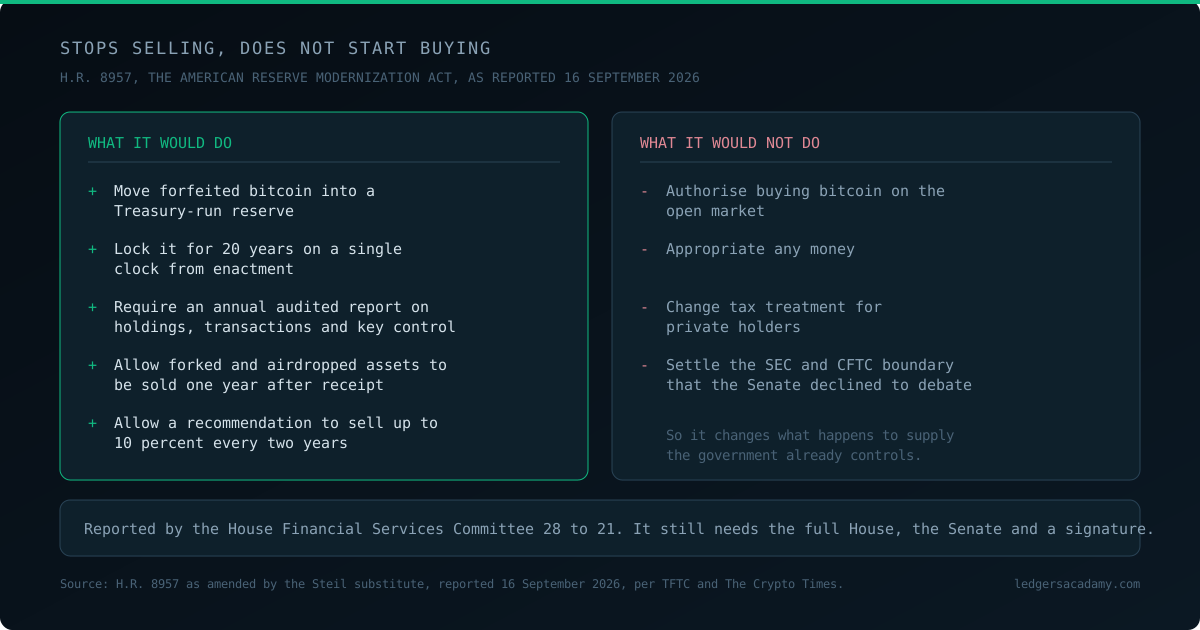
The chairman's substitute reshaped three things, each a compromise worth reading. The 20-year lock now runs on a single clock from enactment rather than restarting for every new deposit, so the reserve actually unlocks one day instead of rolling forward forever. Proof-of-reserve reporting was softened from quarterly to annual, though each report must still cover holdings, transactions and control of private keys, verified by an auditor with cryptographic expertise. Forked and airdropped assets can be sold one year after receipt rather than five, with the Treasury keeping the higher-value chain.
The substitute also added an off-ramp: the Treasury may recommend selling up to 10 percent of the reserve every two years. Supporters call that prudent flexibility. Critics will note that a 20-year lock with a release valve is a softer commitment than the headline suggests. Either way the bill authorises no purchases and appropriates no money, so it creates no new demand. It changes what happens to supply the government already controls. Representative Nick Begich sponsors it, with Representative Jared Golden as Democratic co-lead and 23 cosponsors.
3. Today's Headlines
Sentiment completes a two-day reset
The index has fallen from 69 on Tuesday to 50 now, moving from greed to neutral in two sessions without a large price decline. Prices sit roughly where they were a week ago. What changed is conviction, not valuation.
The Senate leaves with market structure unfinished
Members depart Washington after today, so a floor vote on the reserve bill this month is unlikely. With Tuesday's cloture vote lost, H.R. 8957 is now the main federal crypto measure still moving, a considerable demotion from where the year started.
Rate expectations, not the rate, still set the tone
Wednesday's rise was priced in. The projection that sixteen of eighteen policy makers expect at least one more increase before year end is what continues to weigh, and it lands on an asset class that just lost its legislative catalyst.
4. Security Note: turn off what you are not using
Core Lightning issued an advisory on 15 September urging operators to disable experimental features immediately while it investigated a potential problem. That is narrow advice for node runners, but the week gave two versions of the same lesson. A restaking wallet lost $7.73 million through a trading module it had authorized and stopped scrutinising, and node operators were told to switch off code they had opted into. Every optional feature, module and integration you enable widens the surface that has to hold. Once a quarter, review what your wallets have approved and what flags your software runs, and switch off anything you are not actively using. Unused permissions fail silently until they do not.
5. From the Academy Library
Our guide to geopolitics, US policy and sovereign crypto reserves covers how state holdings differ from private ones, and the lexicon entry on proof of reserves explains what the bill's audit requirement would actually demonstrate. For the policy background, see Academy School chapter thirteen. Start at Academy School.
Bottom line: A government that stops selling is not the same as a government that starts buying. This bill does the first and is careful to avoid the second.
Sources and further reading
- Binance: BTC 24-hour market snapshot
- Binance: ETH 24-hour market snapshot
- Alternative.me: Crypto Fear and Greed Index history
- The Crypto Times: House committee reports the reserve bill 28 to 21
- TFTC: the ARMA markup and what the substitute changed
- Crypto Briefing: the reserve bill heads to committee markup
- Federal Reserve: FOMC statement, 16 September 2026
- CNBC: Senate cloture vote on the Clarity Act fails
- Crypto Daily: the Safe wallet module abused for $7.73 million
Disclaimer: This publication is for education and information only. It is not financial, investment, legal, tax, or security advice.