
Ledgers Academy Letter
The Daily Ledger: 14 September 2026
Saudi Arabia's East-West pipeline closure lifted Brent above $107 and pushed the odds of a Federal Reserve rate rise from about 69 percent to about 87 percent. Bitcoin rose anyway, spot funds took money in after four days of redemptions, and futures open interest kept shrinking.
Subject: A closed pipeline in Saudi Arabia is now a crypto story
Preview: Brent above $107 pushed Fed rate-hike odds from 69 to 87 percent in three sessions, and bitcoin rose anyway.
THE DAILY LEDGER
14 September 2026
An oil pipeline closure lifts Brent above $107 and pushes rate-hike odds sharply higher, spot bitcoin funds take money in after four days of redemptions, and open interest keeps shrinking
Editor's note: this issue uses the completed daily candle for 14 September 2026, 00:00 to 23:59 UTC, from Binance. Prices are closes for that session rather than an intraday snapshot.
How does an oil pipeline in Saudi Arabia move the price of bitcoin? Through the Federal Reserve. The kingdom closed its East-West crude pipeline on 11 September after drone attacks, Brent settled above $100 for the first time since May, and the odds of a rate rise this week jumped from about 69 percent to about 87 percent. Bitcoin rose anyway, which is the part worth explaining.
1. The Day in Numbers
- Bitcoin: $78,189 at the 14 September close, up 1.8 percent on the session, with a high of $79,600 and a low of $76,389.
- Ether: $2,516 at the close, up 1.6 percent on the session.
- Fear and Greed Index: 57, Greed, four points below Sunday.
- US spot bitcoin ETFs: $159.9 million of net inflows, ending four sessions that had taken out about $463 million. BlackRock's fund accounted for $134.3 million, per Farside Investors.
- Brent crude: about $107, having touched roughly $110 immediately after the closure was announced.
2. How does the oil price reach bitcoin?
Not directly. Nobody sells bitcoin because diesel is expensive. The route runs through what traders expect the central bank to do next.
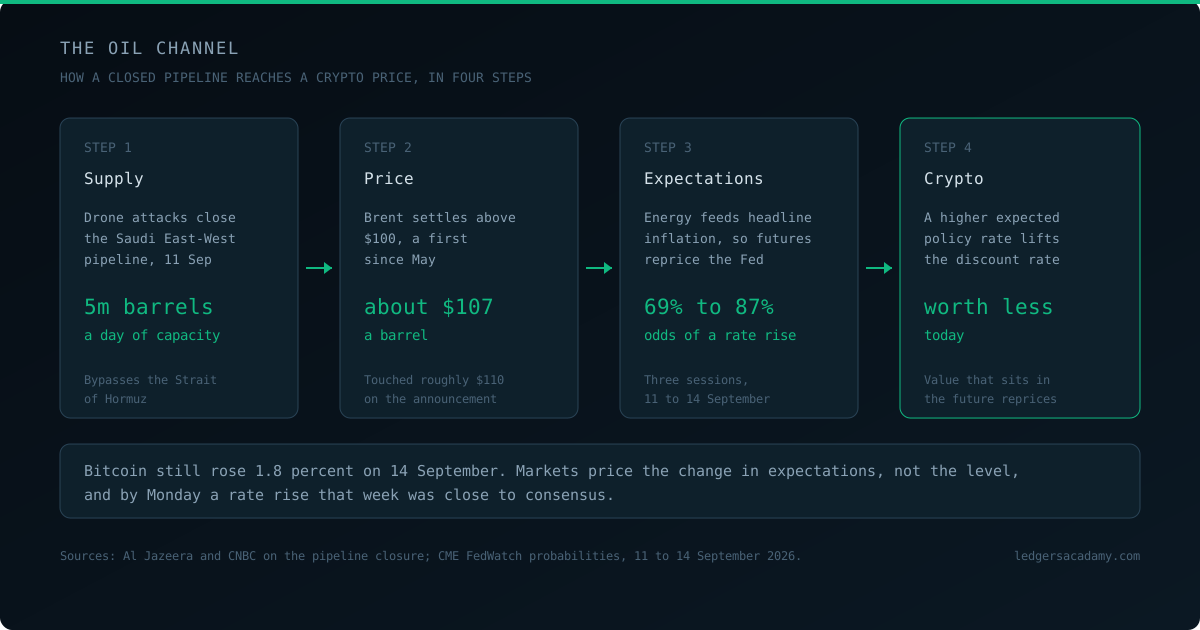
Energy is an input to almost everything, so a sustained oil rise lifts headline inflation. A central bank already worried about inflation reads that as a reason to keep policy tight, and futures markets reprice the odds of its next move within hours. The expected policy rate is then the discount rate applied to every asset whose value sits in the future, which is most of crypto.
So why did bitcoin gain on a day when rate-hike odds rose? Markets price changes in expectations, not levels. By Monday a rise that week was close to consensus, so the remaining question was the path afterwards rather than the meeting itself. The pipeline carried up to five million barrels a day to the Red Sea, bypassing the Strait of Hormuz, so the supply question is real. How long it stays one depends on repairs nobody has credibly dated.
3. Today's Headlines
Oil settles above $100 for the first time since May
CNBC reported that Brent jumped after Saudi Arabia shut the pipeline, which exists specifically to move crude without passing through the Strait of Hormuz. Losing it removes the workaround as well as the barrels.
Spot bitcoin funds take money in again
Monday's $159.9 million of net inflows reversed a four-session run of redemptions. One day does not establish a trend, and the following session undid it, but the concentration matters: BlackRock and Fidelity accounted for nearly all of it.
Open interest keeps contracting
Santiment data put bitcoin futures open interest at 278,151 BTC on 11 September, down from 321,497 BTC on 3 September, a 13.5 percent reduction in eight days. Less leverage means smaller forced moves in either direction.
4. Security Note: Europe now gives wallet makers 24 hours
The vulnerability reporting clause of the EU Cyber Resilience Act took effect on 11 September. Wallet makers selling into the European Union, hardware and software alike, must file a preliminary alert within 24 hours of learning that a flaw is being actively exploited, and a fuller report within 72 hours. Penalties run into millions of euros. For users this changes one habit: vendor security notices should now arrive faster and closer to the event, so treat a firmware or app notice as time-sensitive. Open the vendor's own site or application rather than acting on an email link, because faster genuine notices make forged ones more plausible too.
5. From the Academy Library
Our guide to bitcoin market cycles and macro covers the rate channel in more depth, and the lexicon entry on the dollar index and its correlation with bitcoin explains the other half of the same mechanism. For the hardware side of the security note, see the cold storage guide. Start at Academy School.
Bottom line: The oil price does not compete with bitcoin for buyers. It changes what the Federal Reserve is expected to do, and that expectation is what crypto actually trades against.
Sources and further reading
- Binance: BTC daily candles
- Binance: ETH daily candles
- Alternative.me: Crypto Fear and Greed Index history
- Al Jazeera: Saudi Arabia shuts critical oil pipeline after drone attack
- CNBC: oil prices rise after Saudi Arabia shuts pipeline that bypasses Hormuz
- Yahoo Finance: crypto prices as rate-hike expectations grow, 14 September
- The Cryptonomist: bitcoin ETF inflows rebound on 14 September
- EU Cyber Resilience Act: 24-hour reporting for exploited wallet flaws
- Crypto Briefing: EU mandates 24-hour reporting for wallet vulnerabilities
Disclaimer: This publication is for education and information only. It is not financial, investment, legal, tax, or security advice.